Emergency Tree Removal Cincinnati OH
Connect with local service contractors for urgent tree hazards, fallen limbs, and structurally compromised trees throughout Cincinnati, Ohio.
When Does an Unstable Tree Become an Urgent Situation?
Trees can fail suddenly due to internal wood decay, saturated soil conditions, severe wind events, or structural flaws like co-dominant stems. When a large tree or heavy leader branch fractures or uproots, it poses immediate physical risks to people, roofing, garages, fences, and vehicles.
Emergency tree service focuses on stabilizing compromised trees, removing suspended branches that threaten drop zones, and relieving pressure from structures safely. Because damaged timber often holds extreme internal torsion, attempting to cut storm-tangled or fallen trees without specialized rigging can trigger dangerous spring-pole reactions or secondary structural damage.
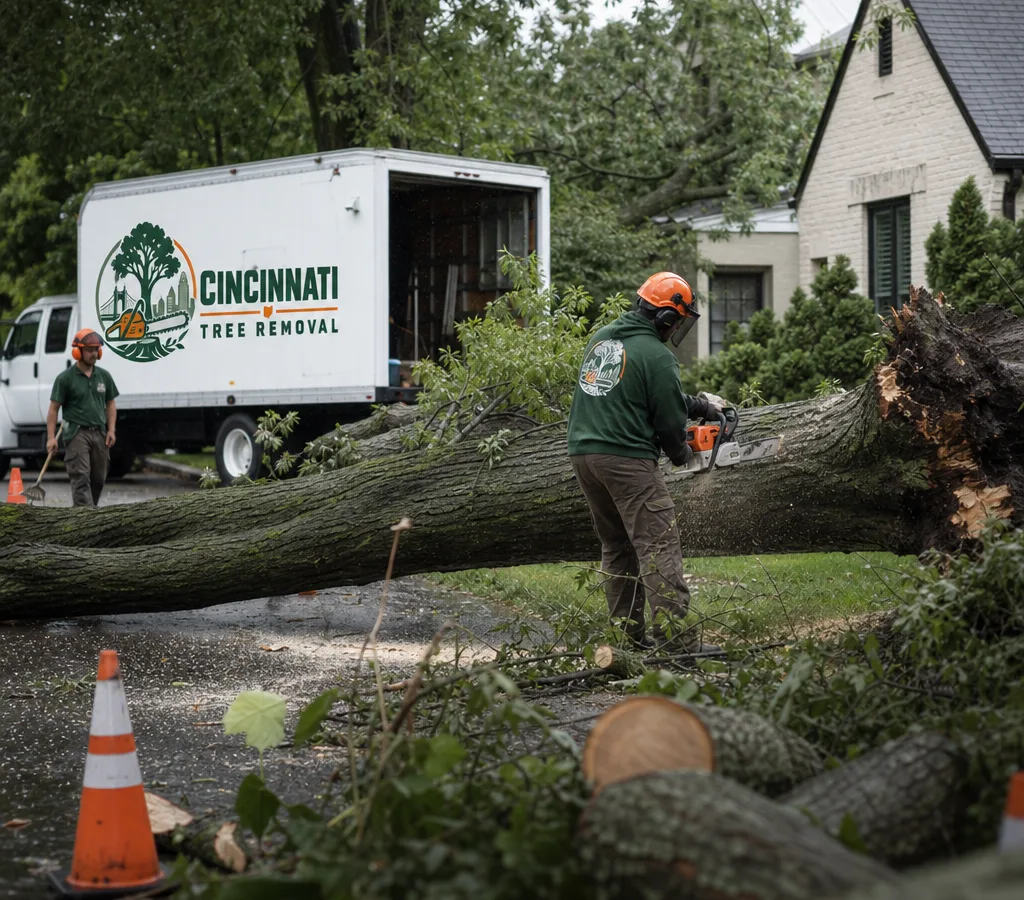
Illustrative visual of a structural roof limb incident. Cincinnati Tree Removal connects homeowners with independent local service contractors.
Trees Contacting Power Lines Require Immediate Utility Clearance
If any fallen limb or leaning tree touches an electric wire or service drop line, stay completely clear (at least 30 feet away). Never touch branches or vehicles near downed wires. Contact local electrical utility authorities immediately before tree work can proceed.
Identifying Urgent Tree Hazard Scenarios
Not all tree issues require emergency handling, but structural contact, vertical trunk splits, and root failure pose serious safety concerns. Select a scenario below to review essential safety steps and how local tree contractors approach stabilization.
Tree or Heavy Limb Resting on Structure
A trunk or large limb has snapped or uprooted and is resting directly against a house roof, garage, carport, or porch awning.
Immediate Safety Precautions
- Evacuate rooms directly beneath the impacted roof or load-bearing wall
- Do not climb onto the roof to attempt DIY cutting
- Avoid shaking or pulling lower branches, which can shift roof loads
When arriving at complex tree hazard sites, professional tree contractors evaluate these critical factors before cutting:
- 1Careful load distribution and stabilizing rigging before any saw cuts
- 2Piece-by-piece sectional removal to prevent secondary structural puncture
- 3Assessing roof truss integrity and advising on emergency weather tarping
Note: All tree work is performed by independent local contractors. Cincinnati Tree Removal does not own equipment or dispatch crews directly.
Information to Have Ready When Calling About an Urgent Tree
When contacting a local tree-service contractor regarding an urgent hazard, having key property details organized helps them evaluate equipment needs and site accessibility:
Check for Utility Lines First
Note whether any electrical, communications, or service drop lines are touched, severed, or near the tree. If wires are involved, stay back and contact Duke Energy or local utilities immediately.
Assess Structural Contact
Determine if the tree or limb is bearing weight on a roof, siding, deck, fence, or vehicle. This helps contractors anticipate crane or rigging equipment requirements.
Document the Scene Safely
Take wide-angle photos from a safe distance showing the full tree, trunk base, and surrounding obstacles. Contractors often review photos to evaluate access paths before dispatching equipment.
Establish Property Access
Confirm whether driveway access is clear, if fence gates allow entry to backyards, and identify any steep grade or tight lot boundaries that might affect heavy equipment positioning.
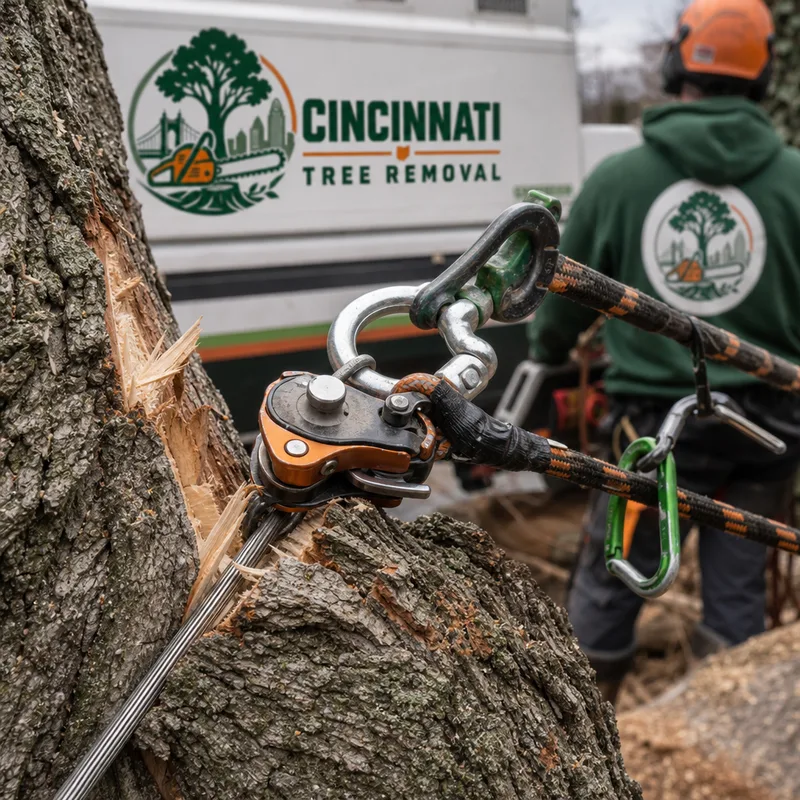
Illustrative image of heavy rigging tackle used during complex tree stabilization.
What Influences the Complexity of Emergency Tree Work?
Emergency tree removals are inherently more challenging than planned ornamental tree care. Because trees under stress behave unpredictably, local contractors must evaluate several critical factors before determining how to safely dismantle the hazard:
Structural Weight & Leverage Points
When trunks lean on roofs, porches, or load-bearing corners, standard felling cuts cannot be used. Rigging systems or mobile crane picks are commonly required to lift sections off the building without transferring extra weight down into the rafters.
Internal Wood Tension & Twisted Fibers
Fallen timber often acts like a loaded spring. Saws can easily bind, or severed ends can kick back violently. Contractors utilize precise relief kerfs to neutralize stored energy in stages.
Access Constraints & Urban Cincinnati Lots
Narrow side yards, steep Ohio River hillsides, retaining walls, and overhead service cables determine whether bucket trucks, track lifts, or manual climbing rigging must be deployed.
Connected Tree Services in Cincinnati
Tree emergencies frequently connect with broader tree care, storm cleanup, and site restoration. Explore related services to understand common property solutions:
Storm Damage Tree Removal
Severe weather events frequently down limbs and compromise trees across entire lots. Review considerations specific to post-storm cleanup.
Full Tree Removal
For trees that are diseased or declining but not yet posing an immediate tipping hazard, planned full tree removal offers scheduled solutions.
Preventative Tree Trimming
Routine crown thinning, clearance cutting over rooflines, and deadwood removal help reduce limb failure risks during high winds.
Arborist Services
Professional tree evaluation can identify fungal decay, hollow cavities, and structural weaknesses before failure occurs.
Frequently Asked Questions About Emergency Tree Removal
Review common questions about tree emergencies, electrical utility boundaries, structural impact, and how local contractors approach hazardous removals in Cincinnati, OH.
Dealing With an Urgent or Hazardous Tree in Cincinnati?
Call to discuss tree removal, fallen limbs, and structural tree concerns with local service contractors serving Cincinnati, Ohio.